


 By
By Step up your game with this crispy healthy garlic bread recipe
Garlic bread is your guilty pleasure, right? But let’s be honest: most of the time, it’s drowning in butter, cheese, and fat.
That typically means you indulge once and then regret it so much that you don’t want to do it again.
The great thing about this healthy oven-baked garlic bread is that it allows you to have your bread and eat it too, very literally.
It is crunchy on the outside, light on the inside, and the ingredients are so few and simple that you can actually remember them.
More importantly, you will not be depriving yourself of the pleasure of eating garlic bread.
Try this recipe and keep it handy for those nights when you need a super easy dinner.
Is there such a thing as healthy garlic bread?
Well, healthy garlic bread is kind of like the simple life version of the classic garlic bread.
Butter is out; olive oil and other basic, natural, or even organic ingredients are in.
The bread stays crunchy, but the whole meal will seem so much lighter.
How can you tell if garlic bread is healthy?
Reducing the unhealthy ingredients will go a long way:
- Get rid of or reduce the amount of butter
- Use only fresh and natural ingredients
- Instead of frying, opt for baking
Calorie cutting can be managed without sacrificing the taste through these swaps.
What is better, oven-baked or fried garlic bread?
Baking for sure. Less oil is used and the texture comes out more consistent.
Moreover, baking dovetails nicely with a clean eating philosophy of using simple and real food items.
Simple Healthy Oven-Baked Garlic Bread Recipe
One of those recipes you will find yourself making every week.
Get these ingredients
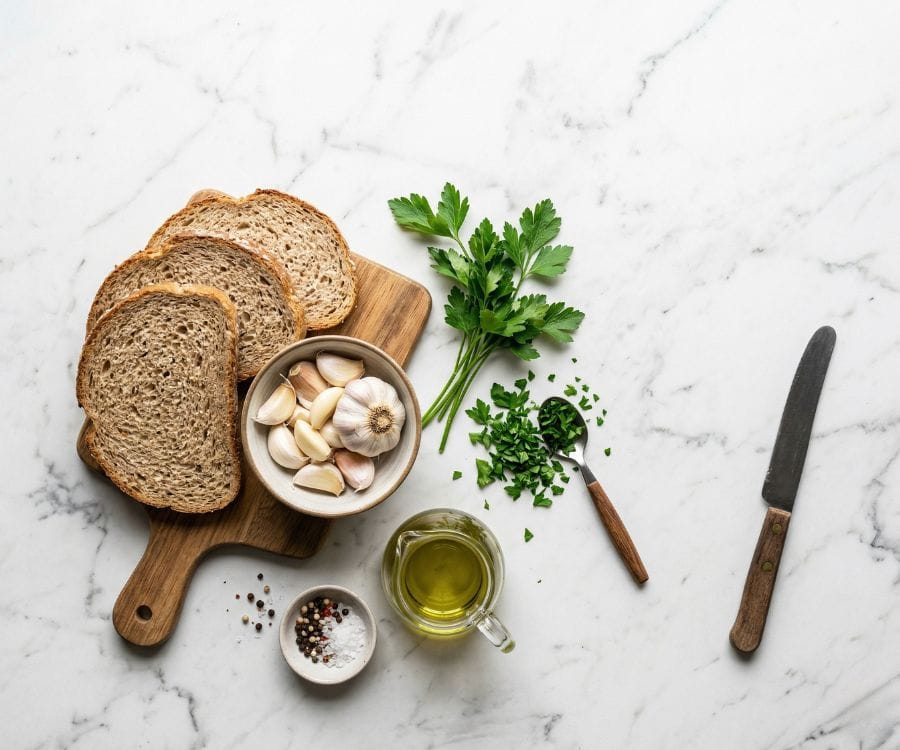
- 4 slices of whole wheat or any crusty bread
- 2 tablespoons of olive oil
- 3 garlic cloves (finely chopped)
- 1 tablespoon of fresh parsley (chopped)
- A pinch of salt
How to make your healthy garlic bread in the oven
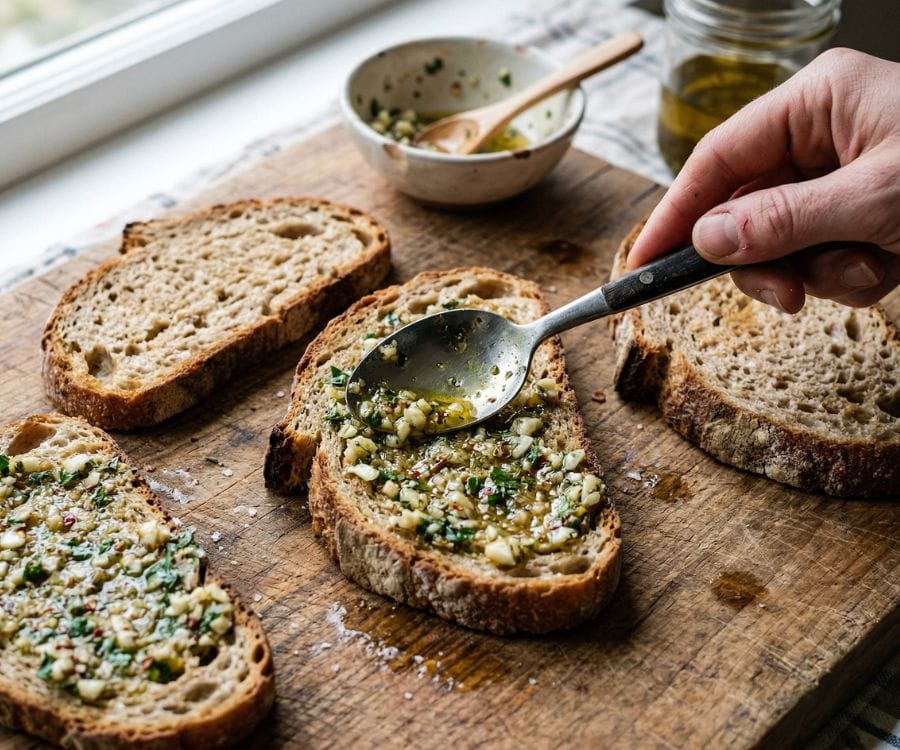
- Turn on your oven and set the temperature at 375°F (190°C).
- Combine the olive oil, garlic, and parsley.
- Spread the mixture on the bread slices carefully.
- Arrange the slices on a baking sheet.
- Place in the oven and bake for 10 to 15 minutes until golden and crisp.
For the best crispy effect, serve immediately after baking.
Can Garlic Bread Be Made Without Butter?
Yes, and it actually tastes cleaner and lighter.
Healthy alternatives
- Olive oil (best choice)
- Avocado oil
- Garlic-infused oil
What changes in taste?
Butter feels rich. Olive oil feels fresh.
That’s why this version works well if you’re exploring low calorie recipes or lighter meals.
How to Make Garlic Bread Crispy in the Oven
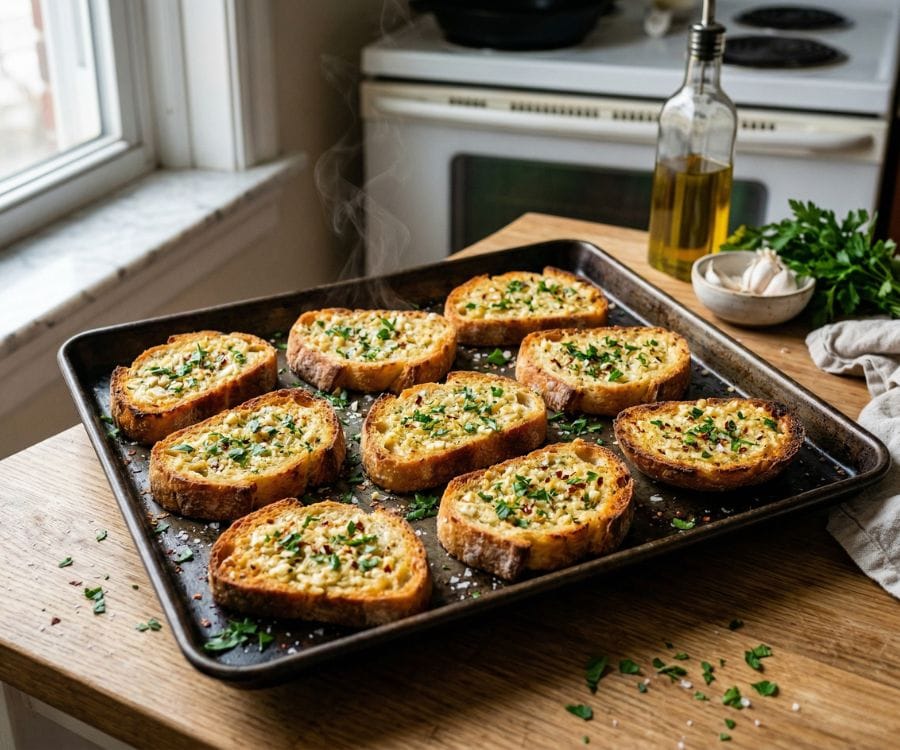
Crispy garlic bread is all about small details.
Baking tips
- Use 375°F for even cooking
- Finish with broil for crisp edges
Bread matters
- Crusty bread gives more crunch
- Whole wheat adds fiber and keeps you full
This is why it fits well into oven baked healthy meals for everyday cooking.
Is Garlic Bread Healthy for Weight Loss?
It can be, if you prepare it the right way.
Make it weight-loss friendly
- Use less oil
- Skip cheese
- Choose whole grain bread
Keep portions realistic
1–2 slices are enough when paired with a balanced meal.
If you’re building a routine with healthy dinner recipes, this works as a perfect side.
What Is the Best Bread for Garlic Bread?
The bread you choose changes everything.
Whole wheat vs white
- Whole wheat → more fiber, more filling
- White bread → softer texture
Texture tips
- Thick slices → soft inside, crispy outside
- Thin slices → extra crunchy
Pick based on your preference.
What to Serve With Garlic Bread
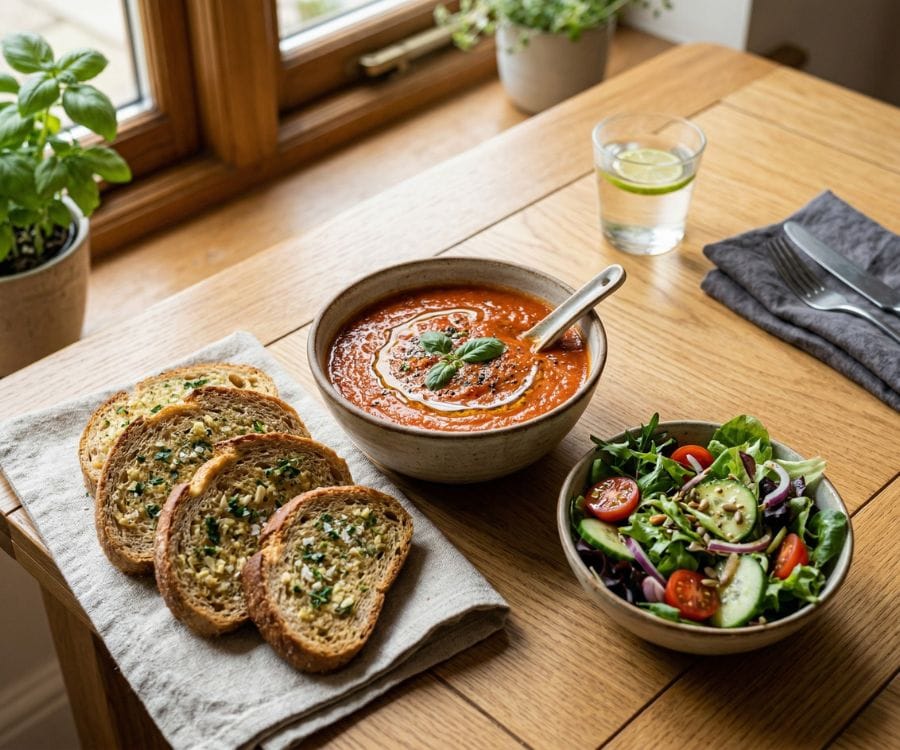
This is where this recipe becomes really useful.
Healthy pairings
- Soups
- Fresh salads
- Roasted vegetables
Quick meal ideas
- Pasta + garlic bread
- Soup + garlic bread
- Rice bowl + garlic bread
You can easily combine it with quick healthy meals when you need something fast and satisfying.
Want a Simple Healthy Meal Plan?
Want a simple 5-day plan with meals like this?
Drop a comment below, and I’ll personally send it to you within 24–48 hours.
How Long to Bake Garlic Bread in the Oven?
Bake at 375°F for 10–15 minutes.
You’ll get:
- Crispy edges
- Soft center
- Balanced texture
Featured Snippet
Healthy oven-baked garlic bread is a healthier alternative to traditional garlic bread. It is made not only with less oil and no butter but also through baking method that results in a crispy texture and fewer calories. This fast 15-minute recipe is an ideal healthy side dish for your regular meals.
FAQs
Is garlic bread healthy or unhealthy?
It depends on how it’s made. Using less oil and whole ingredients makes it healthier.
Can I make garlic bread without butter?
Yes, olive oil is a great alternative and keeps it light.
How do you make garlic bread crispy in the oven?
Use the right temperature, avoid excess oil, and broil at the end.
What is the best bread for garlic bread?
Whole wheat or crusty bread works best for texture and nutrition.
How long does garlic bread take in the oven?
Usually 10–15 minutes depending on thickness.
Final Thoughts
Healthy oven-baked garlic bread, which is easy and quick, is not complicated or difficult to reproduce.
After tasting this bread, you will want to make it regularly. It’s fast, delicious, and can be part of your daily diet without being too filling.
Try this with your favorite meals and find your perfect combo.
If you loved this healthy garlic bread, share it with someone who enjoys simple and healthy cooking.