


 By
By Eating healthy every day sounds simple, but in real life it often feels confusing. One day you hear carbs are bad, the next day fats are the problem. Add a busy schedule, limited time, and mixed advice online—and healthy eating starts feeling overwhelming.
The good news?
You don’t need strict diets, fancy superfoods, or complicated recipes to eat healthy daily. What you need is a simple, balanced approach that actually fits into your routine.
This guide will show you how to eat healthy every day using practical, realistic meals that normal people can follow—without stress.
What Does “Eating Healthy Every Day” Really Mean?
Eating healthy every day does not mean:
- Eating salads all the time
- Cutting out all carbs
- Following a strict meal plan
- Cooking elaborate meals daily
It does mean:
- Eating mostly whole foods
- Balancing your plate
- Keeping meals simple and repeatable
- Avoiding extremes
Healthy eating is about consistency, not perfection.
The Simple Balanced Meal Formula (Use This Daily)
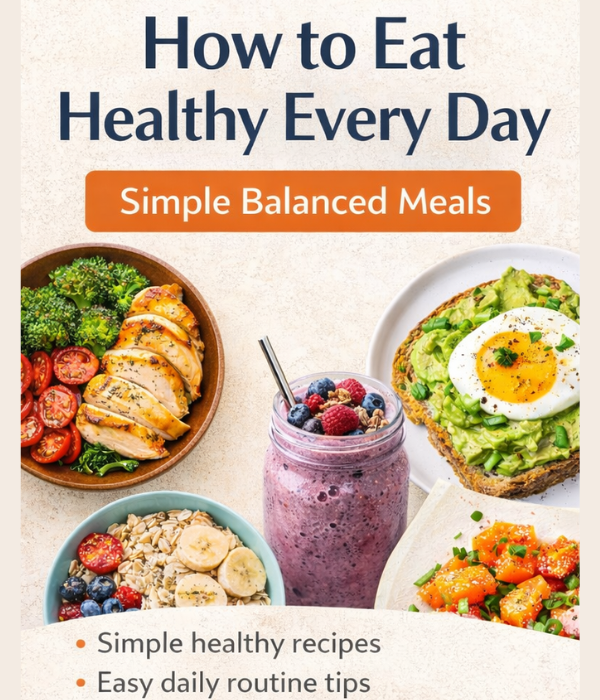
A balanced meal doesn’t need nutrition math. You can follow this easy visual rule:
A balanced meal usually includes:
- Protein – keeps you full and supports muscle
- Carbohydrates – gives energy
- Healthy fats – supports hormones and satisfaction
- Fiber (veggies or fruit) – helps digestion
You don’t need exact portions. Just make sure each meal includes most of these.
How to Eat Healthy Every Day Without Overthinking
1. Keep Breakfast Simple and Repetitive
Breakfast doesn’t need variety every day. In fact, repeating a few healthy options makes life easier.
Good everyday breakfast ideas:
- Oatmeal with fruit and nuts
- Avocado toast with eggs or beans
- Smoothie with fruit, yogurt, and seeds
- Toast with nut butter and banana
If breakfast is simple, you save energy for the rest of the day.
2. Build Lunch Around “Mix-and-Match” Foods
Healthy daily lunches work best when you reuse ingredients.
Example base:
- Cooked rice, quinoa, or potatoes
- Lentils, beans, eggs, tofu, or chicken
- A few vegetables (fresh or roasted)
Change the seasoning or sauce, not the entire meal. This keeps lunches healthy without boredom.
3. Dinner Should Be Light but Filling
Dinner doesn’t need to be heavy to be satisfying.
Simple healthy dinner ideas:
- Stir-fried vegetables with protein
- Soup with bread or grains
- Roasted vegetables with beans or fish
- One-pan or air fryer meals
If dinner is balanced and not overly heavy, digestion and sleep improve too.
How to Eat Healthy on Busy Days
Busy days are where most people give up. The solution is not motivation, it’s preparation.
Use these strategies:
- Keep frozen vegetables stocked
- Use canned beans or lentils
- Cook once, eat twice
- Choose meals with 5–7 ingredients
Healthy eating works best when it’s convenient.
Stop Trying to Be Perfect (This Matters)
One unhealthy meal does not ruin your progress.
One healthy meal does not fix everything either.
Healthy eating works when:
- You eat well most of the time
- You don’t feel guilty for normal food
- You enjoy what you eat
Consistency beats strict rules every time.
What a Healthy Daily Eating Pattern Looks Like
Here’s a realistic example (not a rule):
- Breakfast: Oatmeal with fruit and seeds
- Lunch: Rice bowl with vegetables and protein
- Snack: Fruit, yogurt, or nuts
- Dinner: Simple cooked meal with veggies
You don’t need to eat perfectly—just balanced enough.
Common Mistakes That Make Healthy Eating Hard
Avoid these traps:
1. Making meals too complicated
Simple meals are easier to repeat daily.
2. Cutting out entire food groups
This leads to cravings and quitting.
3. Relying on motivation
Systems and habits work better.
4. Comparing your diet to others
Your routine, culture, and schedule matter.
Can You Eat Healthy Every Day Without Dieting?
Yes. In fact, healthy eating works best without dieting.
Focus on:
- Adding good foods instead of removing everything
- Eating enough protein and fiber
- Keeping meals satisfying
When food is enjoyable, healthy habits last longer.
Is Eating the Same Foods Every Day Okay?
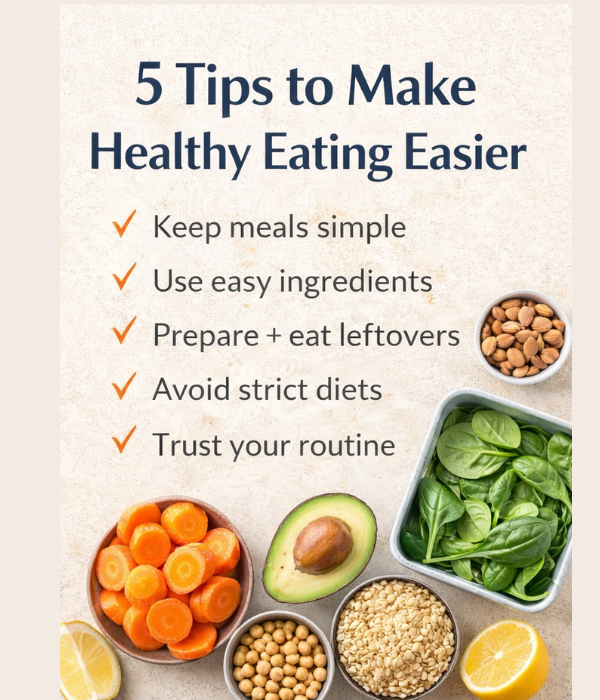
Yes, as long as:
- Your meals are balanced
- You include fruits and vegetables
- You’re not feeling deprived
Many healthy people eat similar meals daily because it reduces decision fatigue.
How Long Does It Take to Feel the Benefits?
Most people notice:
- Better energy in 1–2 weeks
- Improved digestion in a few days
- More stable hunger levels quickly
The key is doing it daily, not occasionally.
Healthy Eating Is a Skill, Not a Rulebook
Learning how to eat healthy every day is like learning any skill. It gets easier with practice.
Start small:
- Fix one meal at a time
- Keep recipes simple
- Focus on balance, not perfection
Over time, healthy eating becomes automatic.
Final Thoughts
Eating healthy every day doesn’t require strict diets or complicated plans. It requires simple, balanced meals that fit your life.
If your food is:
- Easy to prepare
- Enjoyable to eat
- Balanced most of the time
Then you’re already doing it right.
Healthy eating isn’t about doing everything perfectly—it’s about doing the basics consistently.